Day 1 · the same-hour entry
Write it down at the same hour, every hour you can
On our jobs the sheet does not get filled in "when there is a moment." It gets filled in at six, before the light goes, whether the day went well or badly.
Why the hour is fixed
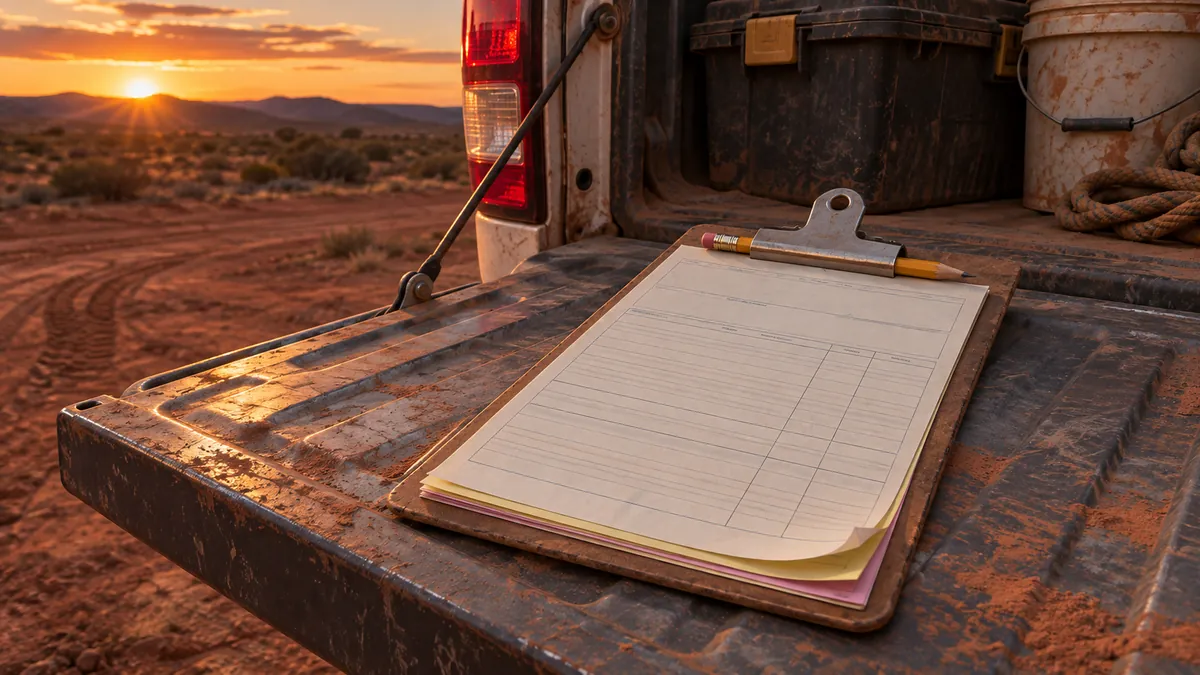
A driller who writes the log whenever he remembers to will eventually write it from memory the next morning, and the next morning is where details go to blur. Was the clay at eighteen meters or twenty? Did the bit start chattering before lunch or after? By breakfast those answers have already been rounded off. So the rule on our trucks is plain: the sheet gets written at the same hour, on site, while the mud is still on the boots.
The fixed hour does two jobs. It catches the day while it is still fresh, and it removes a decision. Nobody has to ask whether now is a good time. Six o'clock is the time. Give it a month and a driller's hand goes looking for that clipboard unprompted, the way it reaches for the light switch in a familiar kitchen.
The household version
A common grumble among folks with a long stretch of calendar behind them goes like this: a day that was full but leaves almost nothing behind by bedtime. Names of people met at the store, the thing the neighbor said about the fence, the reason for going into the garage. The day happened, but the record of it is thin.
The crew's answer is a sheet of your own and an hour of your own. Choose a time that already exists in your day and does not move much: right after dinner, just before the evening news, while the coffee is brewing in the morning. Keep a notebook in that exact spot. At that hour, every day, write five lines. Who you talked to. What you did with your hands. One thing you read or heard. One thing that went wrong. One thing you want to remember tomorrow.
Five lines is a small enough job that skipping it feels silly. That is the point. A long journal that waits for inspiration gets abandoned in a week; a short entry tied to a fixed hour tends to stick around for years, the way our job sheets do.
What the lines are for
Writing a thing down is a second look at it. When you have to put the neighbor's name on paper, you have to find it first, and finding it is the useful part. Researchers who look at recall have long been interested in the difference between merely living through something and deliberately retrieving it later; the retrieving seems to be where much of the work gets done. A paper log is just a dependable excuse to retrieve.
The lines also pile up into something worth having. On a well job, a stack of sheets tells the story of the hole better than anyone's memory could. At home, a month of five-line entries gives you a way to check what happened on a given Tuesday, and quite often the act of reading old lines brings back far more than the lines themselves contain.
When the hour gets missed
It will. Rain stops a job, a grandchild visits, a flight lands late. On the rig we write "no entry, weather" and move on; the next sheet starts at the regular hour as if nothing happened. Do the same. A missed day is a line on the page, not a reason to quit the page.